Dollar Cost Averaging While Paying Off Debt: How to Start With $100 a Month
Most advice gives you two choices: attack your debt with everything you have, or invest for the future. If you've got a credit card at 22% and a car loan at 9%, that feels like an impossible either/or. So people freeze and do neither.
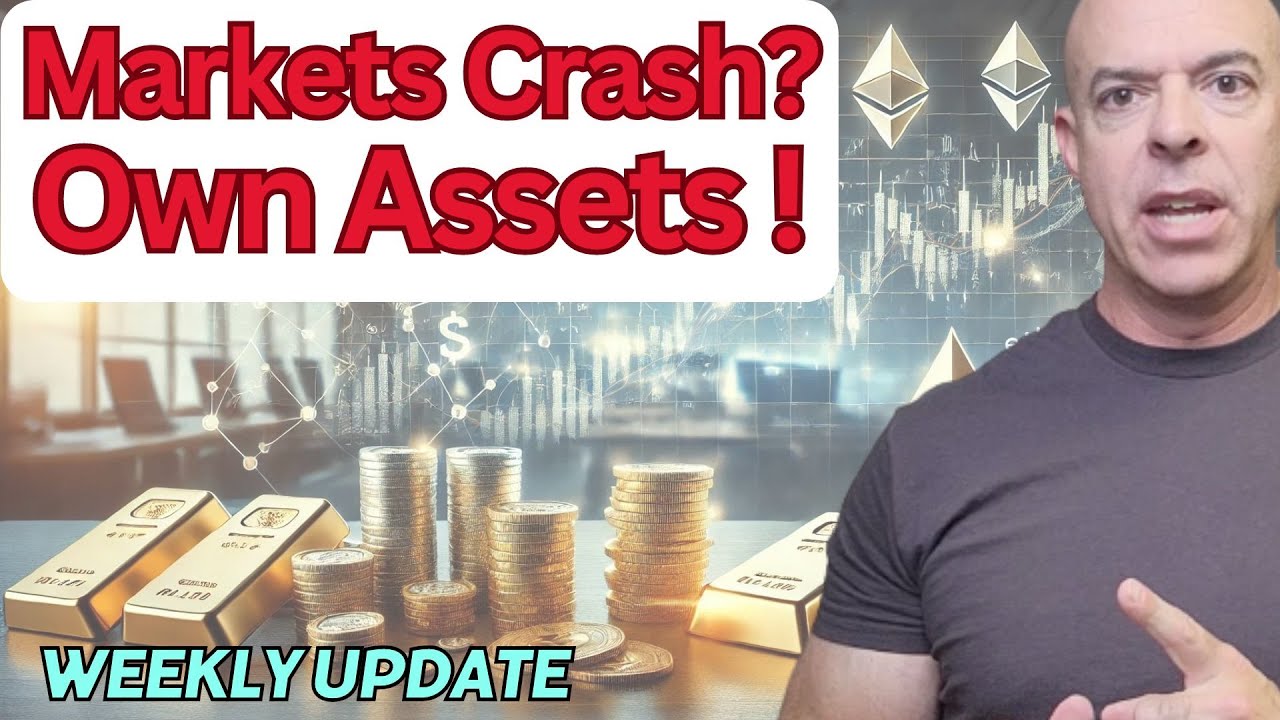
Brian walks through it on video.
Here's a third option I think is worth understanding: dollar cost averaging — putting a small, fixed amount into assets on a schedule — while your main firepower still goes at the debt. Not because it makes you rich fast, but because it builds the habit and gets you off the idea that piling up dollars in a savings account is the same thing as getting ahead.
This isn't financial advice and I'm not a registered financial advisor. It's math you can check yourself.
Why holding only dollars is its own kind of loss
Inflation has been running around 3%. Meanwhile a typical savings account pays well under 1%, and a 3-month CD isn't dramatically better. Even when short-term Treasuries pay 5%, you're only a couple of points ahead of inflation before taxes.
That's the quiet problem. You can watch the number in your bank account grow while the amount of groceries, rent and gas that number buys shrinks. Over 100 years the dollar has lost about 99% of its purchasing power, while assets — gold, silver, stocks, real estate — have gone up. That gap is a big part of how wealthy people stay wealthy: they don't sit on stacks of dollars, they hold things.
But — and this matters — debt at 22% beats inflation at 3% every single time. Inflation eats a few cents on the dollar a year. Your credit card eats twenty-plus. So the order of operations still matters.
The order I'd use
- A starter emergency fund in cash. Yes, cash loses to inflation. It's not an investment, it's insurance against a $900 transmission turning into a new credit card balance. Figure out your number with a bare-bones budget.
- Any employer match. Free money is a return nothing else on this list can touch.
- High-rate debt, hard. Anything in the teens or twenties. This is where the biggest guaranteed return lives.
- A small automatic investment on the side. The habit money. $50, $100, whatever doesn't slow down step 3 in a meaningful way.
- Low-rate debt and bigger investing, together. Once the expensive stuff is gone.
The $100 idea
You already have money leaving your account automatically every month. Netflix. Hulu. Your phone bill. Nobody agonizes over those — they just go.
So why is it so hard to have $100 leave automatically and go toward your future instead of someone else's revenue? That's the whole trick. Same mechanism, different destination. And because it goes out every month regardless of what the headlines say, you stop trying to guess the top and bottom. Some months you buy when gold's up. Some months you buy when it's down. Over years, that averages out — that's literally what "dollar cost averaging" means.
A worked example with simple numbers
Say you have:
| Debt | Balance | Rate | Minimum |
|---|---|---|---|
| Credit card | $8,000 | 22% | $200 |
| Car loan | $14,000 | 7% | $390 |
You find $400 a month of breathing room after cutting subscriptions and a couple of habits. Three ways to use it:
Option A: All $400 at the card
$600 a month total on the card. The $8,000 at 22% is gone in roughly 16 months, and you pay somewhere around $1,300 in interest getting there. Then that whole $600 rolls onto the car. Fastest payoff, lowest total interest, nothing invested along the way.
Option B: All $400 into investments, minimums on the debt
You're paying 22% on $8,000 — about $1,760 a year in interest at the start — and hoping your investments beat that. Some years assets do move big; since February in one stretch I tracked, gold went from about $2,000 to $2,431 and silver from $22.88 to $27.47. But there's no guarantee, and the 22% is guaranteed. This is the option I'd be most careful with.
Option C: $300 at the card, $100 invested
The card takes about 19 months instead of 16, and you pay roughly $200–$250 more in interest total. That's the price. What you get for it: 19 months of actually building an investing habit, roughly $1,900 of your own money moved into assets, and a psychological win — you're not just subtracting from debt for two years straight, you're also adding something.
Three extra months and a couple hundred dollars is a real cost. Whether it's worth it depends on whether the habit sticks. If you've quit payoff plans before because they felt like all sacrifice and no progress, Option C might be the one you actually finish. Run your own version with the credit card payoff calculator and the investment interest calculator so you see both sides in your own numbers.
Where diversification comes in
If you do invest something on the side, don't put it all in one place. Different asset classes often move in opposite directions — that's the actual value.
Picture a medical emergency insurance doesn't fully cover. You need $3,000 fast. If everything you own is in one asset and that asset happens to be down 25% that week, you're forced to sell low. If you hold a few things that don't move together, you leave the down one alone and sell part of the one that's up. Diversification isn't about maximizing returns. It's about not being cornered.
Same reason index funds get mentioned so often: the S&P 500 is 500 companies, not one bet. It has down years. It has up years. Over long stretches it's been one of the steadier ways to get a decent return, which is exactly why a fixed monthly amount fits it well.
Signs to slow down the investing side
- You can't cover the minimums without it being tight
- You have no cash cushion at all yet
- Your job feels shaky — unemployment has been rising, and preparing for a layoff with debt comes first
- You'd be putting it somewhere you can't explain in one sentence
On that last point: when the 2-year Treasury pays more than the 10-year, the way it has recently, that's the market pricing in trouble ahead. That's not a reason to panic-sell anything. It's a reason to keep your cash cushion honest and your debt payoff moving.
The bottom line
Dollar cost averaging while in debt is a compromise, and compromises have costs — in my example, three extra months and a couple hundred dollars of interest. But the alternative for a lot of people isn't a faster payoff. It's quitting month seven because the plan felt like punishment.
Do the math on your own balances first. If your card is over 20%, most of your money should go there. But automating even $100 a month into something real teaches you the lesson that actually changes your finances long term: dollars melt, assets don't, and the people who get ahead own things. Start with the free calculators, then build the plan around what the numbers tell you.
Educational only. Not financial advice. Always do your own research.