Capital One Student Credit Cards Reviewed: Quicksilver vs. Savor One
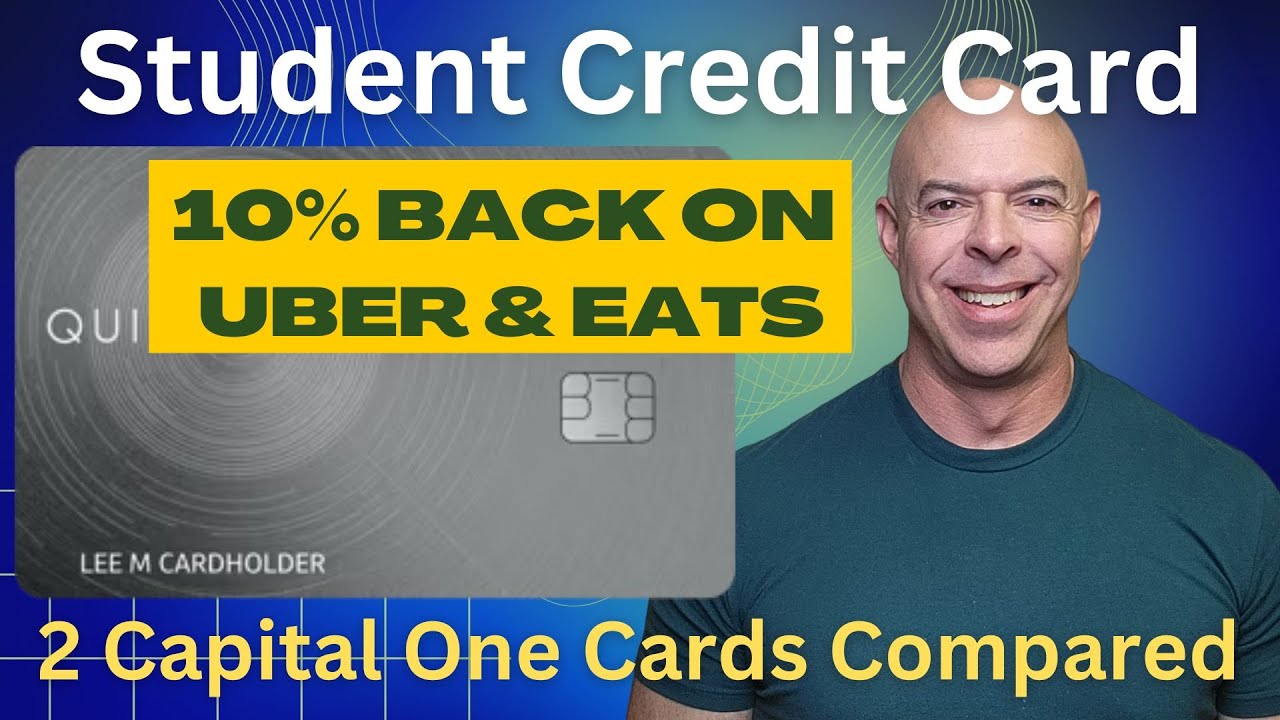
If you're a student with no credit history, you hit a catch-22: you can't get approved for a good card without a credit score, and you can't build a score without a card. Student cards exist to break that loop. In this video I walk through the two Capital One student credit card options: Savor One Rewards for Students and Quicksilver Rewards for Students, what each one pays back, and which one I'd pick.
What you'll learn
- Who qualifies for a Capital One student card (and the age and enrollment rules)
- How to use a card to build credit without paying interest
- What credit utilization is, and why 30% is the number to watch
- How fast balances now report to the credit bureaus
- The cash back on Savor One vs. Quicksilver, side by side
- Which of the two I'd recommend for most students
Who can get these cards
These are student cards, which means you don't need excellent, great or even good credit — fair credit is generally enough, and as a student you may have very little history at all. You need to be 18 or older and either currently enrolled in college or accepted and starting within three months. That three-month window matters: you can apply before the semester begins. If you're not a student, these specific cards aren't available to you, and the regular Capital One lineup would be the better place to look.
Building credit the boring way
To build credit you have to actually use the card — but I do not recommend carrying a balance. Here's the simple version: your statement cycle runs roughly 30 days. Buy something for $100, and when the bill comes due, pay it in full. You owe zero interest. So only put things on the card that you already have the money for. If you're buying groceries with cash or a debit card, switch to the credit card, then log in, enter your bank account and routing number, and pay it off (or mail a check). Same money, now it's building a credit file.
Utilization: the number most people miss
The credit bureaus look at how much of your available credit you're using. Say Capital One gives you a $1,000 limit. The agencies like to see utilization at 30% or less, which means keeping the reported balance around $300 or below on that card.
Here's the part that surprises people: banks report your balance during the month, not just what you carry over. So if you ran up $900 on a $1,000 card and paid it off in full, the bureau may still have seen 90% utilization. That can drag your score down even though you never paid a dime of interest.
The good news is that reporting is much faster than it used to be. If nobody is pulling your credit right now, a high utilization month isn't the end of the world — as long as you're paying it off. But if you know you're about to apply for a car loan, a mortgage or another card, get every balance under 30% first. That can move your score within a month or sooner.
Savor One vs. Quicksilver
Savor One Rewards for Students: 3% cash back on dining, entertainment and streaming, 1% on everything else. Plus 8% back through Capital One Entertainment and around 5% through Capital One Travel.
Quicksilver Rewards for Students: no bonus categories — 1.5% back on everything, plus the same Capital One Entertainment and Travel rates.
Both have no annual fee and a $50 signup bonus after roughly $100 of spending in the first three months. At the time I recorded this, both also carried an Uber perk through November 14, 2024: 10% off Uber rides and Uber Eats, with the monthly Uber subscription fee waived. That promotion has since ended, so don't pick a card based on it today.
Which one I'd choose
You may only be approved for one, so this can be academic. But if I had the choice, I'd take the Quicksilver. Flat 1.5% on everything means you never have to think about which card to pull out. Later on, once you have several cards, category juggling makes sense — you can run the numbers with the Calculator to Value Points or Miles and Compare to Cash. For a first card, simple wins. And 1.5% back with thin credit is close enough to the 2% someone with excellent credit gets that I wouldn't lose sleep over the difference.
Key steps
- Confirm you qualify: 18 or older, enrolled in college or starting within three months.
- Apply for one student card. Consider a second from a different bank later, since limits start low and qualifications differ.
- Move spending you already pay cash for — like groceries — onto the card.
- Pay the statement in full every cycle. Never carry a balance.
- Keep the balance that reports under 30% of your limit ($300 on a $1,000 card).
- Before applying for any loan, pay balances down and let them report low first.
- If a balance ever does get away from you, run it through the Credit Card Payoff Calculator and attack it on a schedule.
FAQ
Do I need good credit to get a Capital One student card?
No. These are built for people starting out — fair credit is generally enough, and you may have little or no credit history. You do need to be 18 or older and either enrolled in college or accepted and starting within three months.
Does paying my card in full every month still build credit?
Yes, and it's the best way to do it. The card reports activity whether or not you carry a balance, and paying in full means zero interest. Just watch the balance the bank reports mid-cycle — keeping it under 30% of your limit protects your score. If you're already carrying balances, see Your Credit Card Balance Isn't the Number That Matters.
Savor One or Quicksilver — which is better?
Savor One pays more if a lot of your spending is dining, entertainment and streaming (3%). Quicksilver pays 1.5% on everything with nothing to track. For a first card I lean Quicksilver for the simplicity. Either way, rewards only come out ahead if you never pay interest — the math on that is in How to Pay Off Credit Card Debt Fast Using Your Cash Back Rewards, and if you're already in the hole, start with the get out of debt courses.
What cash back does the Capital One Savor One student card pay?
Savor One Rewards for Students pays 3% cash back on dining, entertainment and streaming, and 1% on everything else. It also pays 8% back through Capital One Entertainment and around 5% through Capital One Travel. There is no annual fee, and there is a $50 signup bonus after roughly $100 of spending in the first three months.
Can paying in full still show high utilization on a Capital One student card?
Yes. Banks report your balance during the month, not just what you carry over. If you ran up $900 on a $1,000 limit and paid it off in full, the bureau may still have seen 90% utilization. Before applying for a car loan, a mortgage or another card, I get every balance under 30% first and let it report low.
The step-by-step written version, with a worked example.