Debt Consolidation Loan Denied? What to Do Next (With Real Math)
You did the research. You found out that rolling three credit cards into one fixed-rate loan would cut your interest rate roughly in half. You called the bank. And they said no.
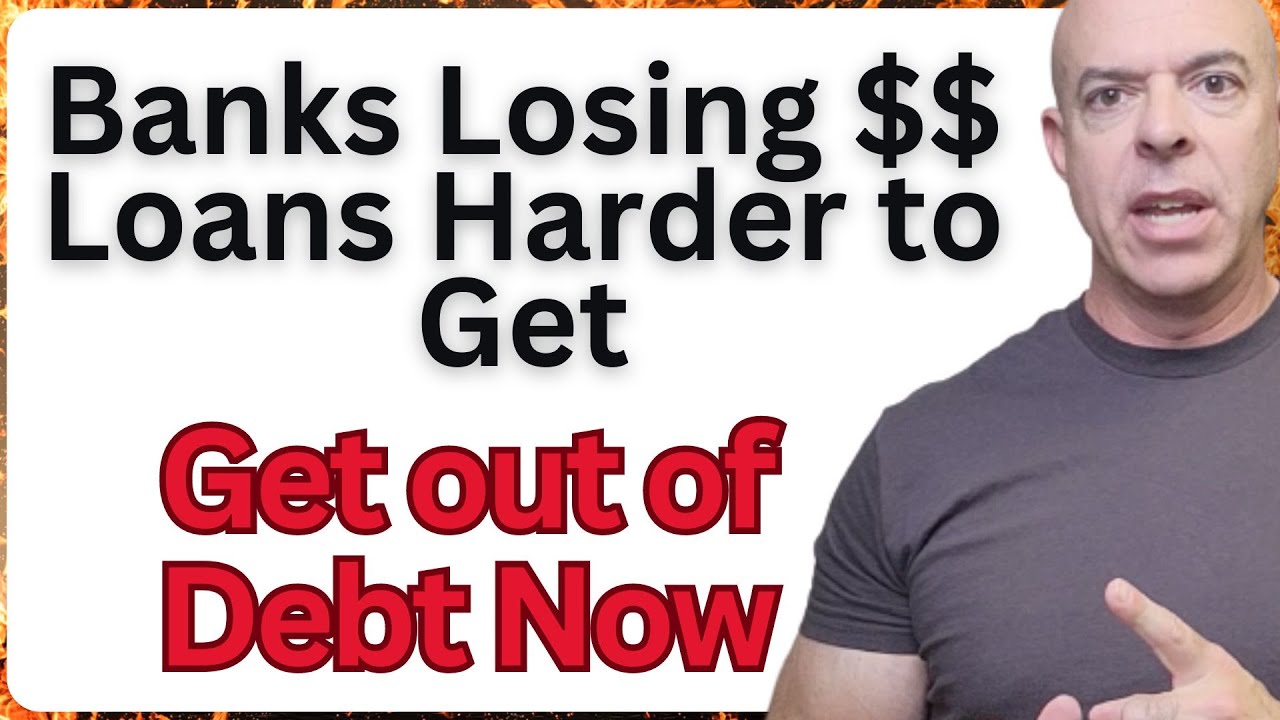
Brian walks through it on video.
It stings, and it's more common than it used to be. Banks have been taking real losses on consumer debt — billions of dollars written off as unrecoverable, mostly from credit card borrowers who stopped paying entirely as rates and inflation squeezed them. When a bank eats losses like that, the response is predictable: they tighten lending standards. The score that got you approved two years ago doesn't get you approved today.
Here's the good news, and it's bigger than it sounds: a consolidation loan was never the thing that paid off your debt. Extra payments were. The loan just made the extra payments cheaper. You can get most of that benefit without a bank's permission.
Why you got denied (it may not be your fault)
There are two ways to get turned down:
- Your situation changed. Missed payments, higher balances, a drop in income — any of these can push your score or your debt-to-income ratio past the line.
- The line moved. The bank tightened standards for everyone. Your score didn't fall much, but the minimum they'll lend at went up.
The second one is maddening because there's nothing you did wrong. Unsecured personal loans — loans with no collateral behind them — are the first thing banks pull back on when they're nervous, because there's nothing to repossess if you stop paying. That's exactly the loan most people want for consolidation.
Understand what the bank is: a business trying to make money, not a partner in your financial life. They lend when lending is profitable and they stop when it isn't. Plan accordingly.
The math on what you actually lost
Let's use round numbers. Say you have three cards:
| Card | Balance | APR |
|---|---|---|
| Card A | $5,000 | 23% |
| Card B | $5,000 | 23% |
| Card C | $5,000 | 23% |
| Total | $15,000 | 23% |
At 23% on $15,000, you're paying roughly $287 a month in interest alone before a single dollar touches the balance. That's about $3,450 a year burned.
The consolidation loan you wanted was, say, 13%. At 13% on $15,000, interest runs about $162 a month, or around $1,950 a year. So the loan would have saved you roughly $125 a month in interest.
That's real money — I'm not going to pretend otherwise. But notice what it isn't. It isn't a payoff plan. If you took that 13% loan and paid only the minimum-ish amount, you'd still be in debt for years. The loan saves $125 a month. Finding $300 a month to throw at the balance does far more.
What $300 extra does on its own
Keep the $15,000 at 23% and pay a flat $500 a month. You're out of debt in roughly 44 months and pay somewhere in the neighborhood of $6,800 in interest.
Now pay $800 a month instead — the same $500 plus $300 you freed up by cutting expenses. You're done in about 23 months and pay roughly $3,300 in interest. That's about $3,500 saved and nearly two years cut off, with no bank approval required.
Run your own numbers in the credit card payoff calculator — plug in your real balances and see what an extra $100, $200 or $300 does to your payoff date. The difference is usually bigger than people expect.
Five moves that don't need a loan officer
1. Attack the highest rate first
If all your cards are near the same rate, it won't matter much. If one is at 29% and another is at 14%, it matters a lot. Pay minimums on everything, throw every extra dollar at the highest rate, then roll that payment into the next card. Work through it with the debt avalanche calculator.
2. Or use the snowball if you need momentum
Smallest balance first costs a little more in interest but gives you a win faster, and wins keep people going. There's no wrong answer here — the wrong answer is doing neither. Compare both approaches in the snowball vs. avalanche breakdown, or just model it in the debt snowball calculator.
3. Free up cash from your spending, not from a bank
This is where the $300 comes from. Streaming services, subscriptions you forgot about, eating out, the extra phone line. It's temporary — you're not giving things up forever, you're giving them up until the cards are gone. See how to cut expenses temporarily for a list of places to start.
4. Look at secured borrowing instead of unsecured
Banks tighten unsecured lending first. A loan with collateral behind it is a different conversation. If you have a car with equity and a high-rate auto loan, refinancing it can sometimes free up cash flow or even let you roll credit card debt into a much lower rate. The math is in using an auto refinance to pay off credit card debt. This isn't automatically a good idea — you're putting your car behind that debt — but it's an option that still exists when personal loans don't.
5. Check whether a 0% balance transfer is still open to you
Transfer offers also tighten in a credit crunch, but the approval bar is sometimes different from a personal loan's. If you can move $15,000 at 23% to 0% for 15 months with a 3% fee, you pay $450 in fees instead of about $4,300 in interest over that stretch. The catch is you must actually pay it down before the promo ends. Walk through it in is a balance transfer worth it.
Protect your score while you work
Here's the trap: people wait and wait for conditions to improve, fall behind on payments while they wait, and by the time they ask for help their score is lower and the standards are higher. Both doors close at once.
So even while you're building a plan, keep every minimum payment current. Late payments do more damage to your approval odds than a high balance does. If a consolidation loan or transfer becomes available again in six months, you want to still qualify for it.
Plan for conditions getting harder, not easier
Nobody knows what rates will do. But the environment that caused banks to tighten — high rates, high inflation, rising unemployment, slowing growth — doesn't unwind quickly. Building your plan around "once rates come down" is building your plan around something you don't control.
Two things worth doing while you pay down debt:
- Keep a small cash cushion. If something breaks and you have no cash, the card comes back out and you've undone months of work. Start with a fast, basic emergency fund.
- Think about job risk. When businesses can't borrow cheaply, layoffs follow. Preparing for a layoff while carrying debt is worth an hour of your time.
The bottom line
A denied consolidation loan feels like a door slamming. It's really just one tool being unavailable. The actual engine of getting out of debt is the gap between what you earn and what you spend, aimed deliberately at your highest-rate balance, month after month.
Pull up your statements tonight. Write down the balance, rate and minimum for every debt. Find $100 or $200 or $300 in your spending you can redirect. Then run it through the debt reduction calculator and get a real payoff date on paper. If you want a structured walkthrough, the get out of debt course covers the methods step by step.
The banks aren't going to save you. The government isn't going to save you. But the math is on your side the moment you start feeding it extra dollars — and that part has never required anybody's approval.