Auto Loan Delinquencies Are Rising: How to Protect Your Car Payment
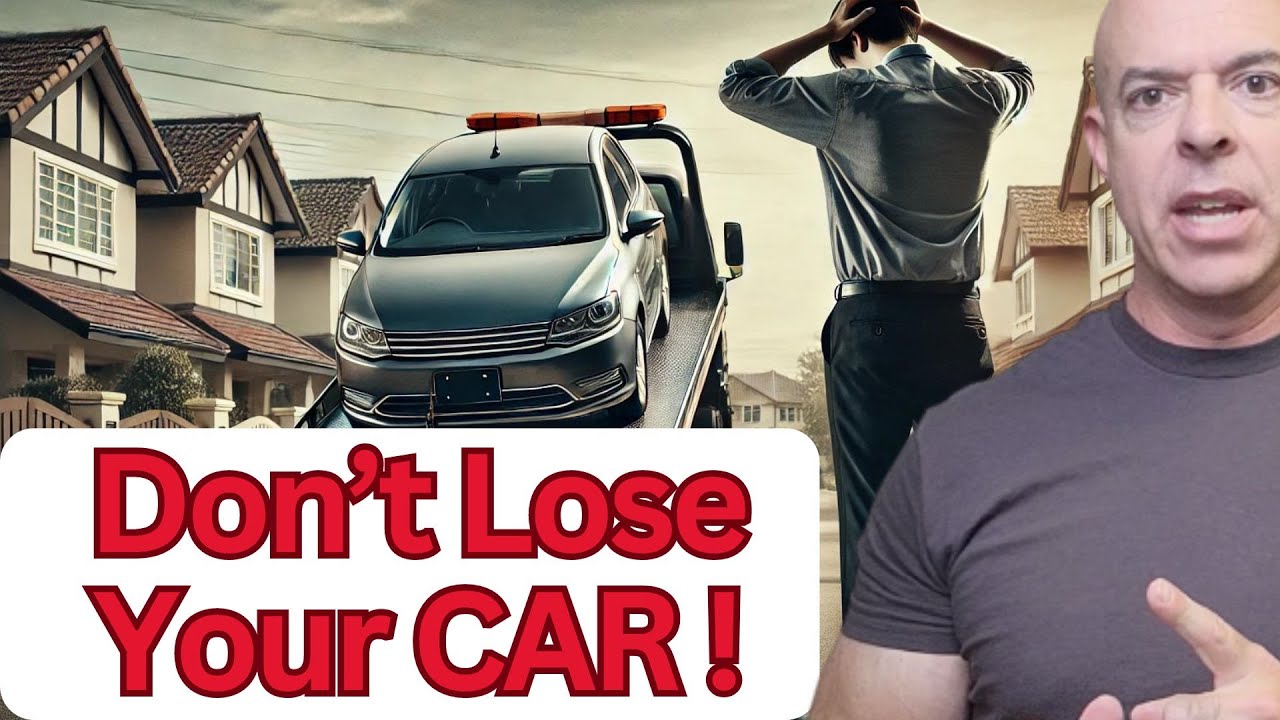
More people are falling behind on car loans, and losing a vehicle is one of the fastest ways a money problem turns into a job problem. In this video I tell the story of the morning my Honda Pilot vanished out of my own driveway — even though I hadn't missed a payment — and then I walk through four free calculators I built to help you pay a car loan off faster.
No shame here. Just the math on what a car really costs, what an extra $50 a month does, and whether throwing a bonus at the loan beats sticking it in a savings account.
What you'll learn
- Why losing a car hits harder than almost any other debt problem
- How to find the true, all-in cost of a car before you sign
- The dealership "what monthly payment can you afford?" trick — and how to reverse the math
- What small extra payments and one-time payments actually save you in time and interest
- How velocity banking works on a car loan, and when it doesn't
- How to compare paying down the car against investing the same money
My car got repossessed by mistake
Years ago I woke up on a Sunday morning and my Honda Pilot was gone from the driveway. My first thought was theft, because cars don't get stolen out of driveways in that neighborhood. After some phone calls I found out a large national bank had a glitch in its computer system that flagged somewhere between 500 and 600 people nationwide as badly behind on payments. Faxes went out to tow companies across the country and all those cars got hooked and hauled to a lot that weekend. Mine was one of them.
The bank apologized, paid the fees, and I got the car back. But that feeling stuck with me. Two people working, both needing to get somewhere, and suddenly the vehicle is just gone. I hadn't missed a single payment and it still happened. That's why I tell people: you don't want to miss a payment, you don't want that hitting the credit bureaus, and the best defense is getting out of the loan faster.
Before you buy: what the car actually costs
The first calculator is for people who haven't bought yet. You type in the price, the loan terms and the other costs that come with owning a vehicle, and it shows you the real number — not the sticker.
It also runs the math backwards. Dealerships love to skip the price entirely and ask, "What can you afford every month?" Then they hand you a menu of payments. The price of the car still matters, because the loan is written on that amount and that's how you end up underwater or stuck when you need to sell. Put in the payment they're quoting and the interest rate, and the calculator tells you what they're actually charging you for that car. Sometimes it's more than the sticker on the window.
Three ways to pay it off faster
The second calculator shows what a slightly bigger payment does. Say you borrowed $20,000 at 7% over 60 months and you'd end up paying roughly $24,000 all in. If your payment is $400 and you can send $450, that extra $50 goes straight to principal. You might end up paying $23,000 or $22,000 instead, and finish in four and a half years instead of five. Small money, real result.
The third handles one-time payments. Maybe every birthday you get $200 and you throw it at the car. Over five years that's $1,000 and the calculator lets you enter as many dates and amounts as you want — birthdays, bonuses, tax refunds.
The fourth is my favorite: velocity banking for car loans. Say you're 14 months into a 7% loan and you can get a 12-month personal loan for $5,000 at 10%. At first that sounds backwards — paying off cheap debt with expensive debt. But it's a smaller amount over a shorter time, and interest on the car is charged on the total owed. Drop the balance from $20,000 to $15,000 and less of every payment goes to interest and more goes to principal. Sometimes it works, sometimes it doesn't. Put your numbers in and see.
Pay the car or invest the money?
The last one asks a different question: you've got $1,000 — CD, treasury, savings at 2% or 5%? Or into the car? Your return on the car is the interest you no longer pay. I've got an example where a $1,000 one-time payment works out to a 39% return. I'd take that all day.
Key steps
- If you're shopping, run the Auto Loan Calculator and get the all-in cost before you talk payments.
- Never negotiate on monthly payment alone — reverse-calculate the price from the payment they quote.
- Add whatever you can to the payment and check the savings with the Auto Loan Early Payoff Calculator.
- Schedule windfalls — bonuses, gifts, refunds — in the one-time payments calculator.
- Test a short, larger loan against your car loan with the velocity banking calculator before you borrow anything.
- Compare the interest you'd save against what the same cash earns invested, then choose.
FAQ
Can a car be repossessed by mistake?
It happened to me. A bank system glitch flagged 500 to 600 accounts nationwide and the cars were towed that weekend, mine included, even though I was current. The bank apologized and covered the fees. The lesson is to keep your own records of every payment so you can prove where you stand.
Does paying extra on a car loan really help?
Yes, because anything above the scheduled payment goes to principal, and interest is calculated on what you still owe. On a $20,000 loan at 7% over 60 months, an extra $50 a month can knock months off the term and save real interest. Run your own numbers in the payoff calculator.
Is it smart to borrow at a higher rate to pay down a car loan?
It can be, and it can also be a mistake — it depends on the amounts and the terms. The idea is that a smaller loan over a much shorter period costs less total interest than leaving a big balance sitting on the car loan for years. Do the math first with the velocity banking calculator instead of guessing.
The step-by-step written version, with a worked example.