Debank Yourself: How Asset-Backed Borrowing Compares to a Bank Loan
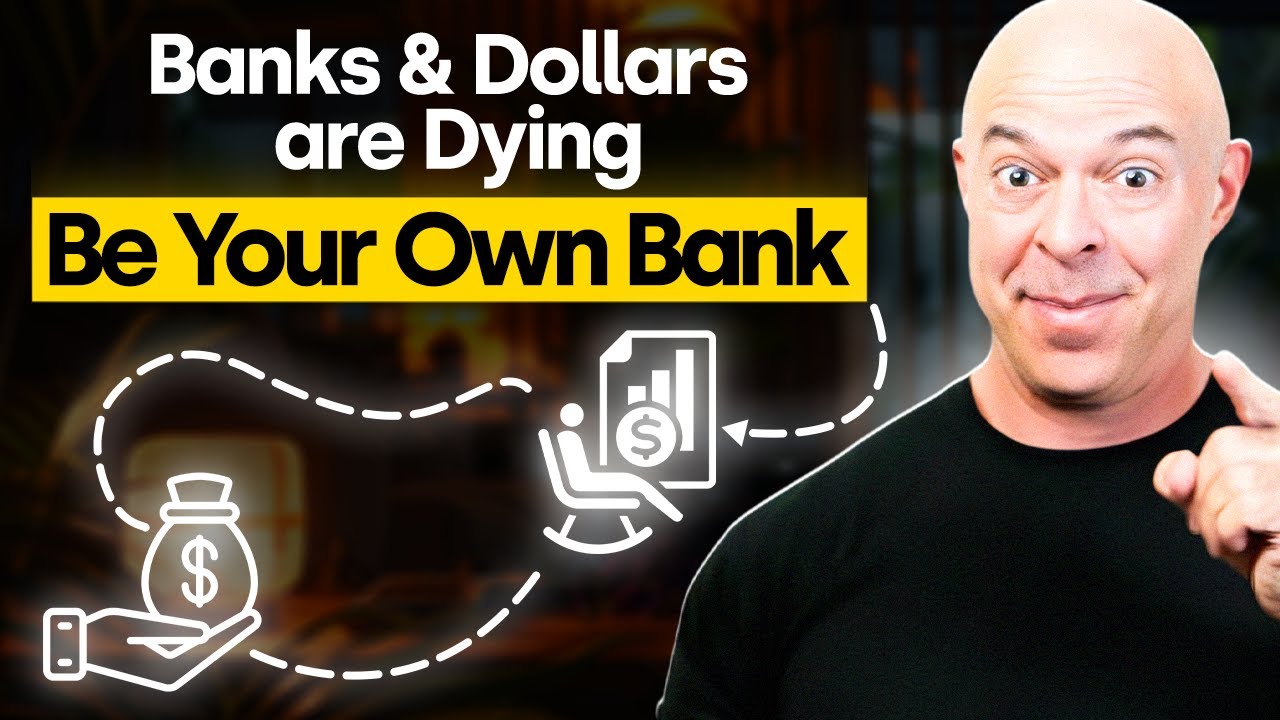
In this one I put forward a hypothesis: banks are dying unless they change, and the US dollar is not as necessary as you think. I walk through how the centralized banking system actually makes its money, what a decentralized, collateral-backed loan looks like instead, and the real pros and cons of each.
This is informational only. I'm not a financial advisor, and the crypto side carries real risk. But this is happening right now, and you should know what it is before you decide whether you want any part of it.
What you'll learn
- How banks profit off the spread between your 1–4% savings rate and your 8–18% loan rate
- What fractional banking, uninsured deposits and a bank run actually mean for your money
- How an over-collateralized loan works — no application, no denial, no fixed payment
- Why liquidation (a margin call) is the big risk on the crypto side
- What stablecoins are and why they're pegged to a dollar without being dollars
- How MasterCard/MetaMask, Visa/Coinbase and Apple/Circle are already building this in
The centralized system: you're on the wrong side of the spread
Picture the bank in the middle. You and everyone else deposit money and get maybe 1%, maybe 4% if rates are high. The bank lends that same money out at 8%, 12%, 18% for a car. That differential is the bank's business. Meanwhile inflation is running around 3% and you're paying income tax, state tax, sales tax, property tax on top. Your deposit is losing buying power while the bank earns the spread. The bank isn't there for your benefit. It never was.
Your statement is an IOU
Here's the part most people never think about. Banks don't hold all the money they say they hold. They lend it out. If depositors with more than the $250,000 FDIC limit get nervous and show up at once, the cash isn't there. That's a bank run, and we've seen them recently. Your statement doesn't mean your dollars are sitting in a vault — it means the bank owes you that money.
The alternative: hold assets, borrow against them
Say you want a $20,000 used car. Option one: save $20,000 in dollars while inflation eats them, then spend it. Option two: hold $20,000 in assets and post them as collateral for a loan. On a decentralized exchange you're typically over-collateralized — at 80% loan-to-value, $20,000 of collateral gets you $16,000. The rate I'm seeing is around 6%, cheaper than a bank car loan, because the lender's yield and your rate meet in the middle instead of feeding a bank's spread.
There's no application. Nobody asks your Social Security number, your employer or your income. You can't be denied, because the collateral covers the loan. And there are no scheduled payments — interest accrues on the balance and you pay whenever you want, any amount you want. If the asset doubles, you can sell part of it, clear the loan, and keep the rest.
The risks, plainly
If the collateral falls below the threshold, they liquidate some of it to cover the loan — same idea as a margin call on stocks. There's no FDIC backstop. Regulation is thin and security is on you. That's why stablecoins exist: coins pegged to a dollar, backed by assets, redeemable like a money market share, so you can sit in something dollar-priced without holding dollars.
It's already being built in
MasterCard is working with MetaMask. Visa is working with Coinbase. Apple is working with Circle on USDC. You tap the card at Home Depot, $50 of assets sells instantly, the merchant gets dollars, and you held dollars for about a second. You can even route payroll into Coinbase and convert it on arrival. That's what debanking looks like in practice.
Key steps
- Look at your own balance sheet and count how many actual dollars you hold. It's usually far less than you think.
- Understand the spread your bank earns on you — compare your savings rate to your loan rates.
- If you carry high-rate debt, deal with that first; run it through the credit card payoff calculator.
- Learn self-custody before you move a dollar: hot wallets, cold wallets, who holds the keys.
- If you explore collateralized borrowing, know the liquidation threshold before you borrow, and keep the loan well under it.
- Keep a plain-dollar emergency buffer so you're never forced to sell or get liquidated at the worst moment.
FAQ
Is borrowing against assets safer than a bank loan?
Different, not safer. The rate is usually lower and there's no approval process or denial, but there's no FDIC insurance and if your collateral drops far enough it gets sold to cover the loan. A bank loan can't liquidate your savings for you. Know which risk you're trading for which.
What is a stablecoin, in plain English?
It's a coin pegged to one dollar and backed by assets, similar in spirit to a money market fund share that holds a $1 value. You're holding something dollar-priced without holding dollars, and you can redeem it. USDC is the one most often mentioned, and more companies are launching their own.
Should I do this while I still have credit card debt?
My honest answer is no. An 18–25% card balance is a guaranteed loss every month it sits there, and no asset strategy reliably beats that. Kill the high-rate debt first — see how to pay off credit card debt fast and the Avalanche Debt Eliminator — then worry about where you park what's left.
The step-by-step written version, with a worked example.